
Quick Answer
PECO distribution charges cover the cost of delivering electricity through local power lines, transformers, and substations. These charges are regulated by the PA PUC and apply regardless of which electricity supplier you choose.
What Are PECO Distribution Charges?
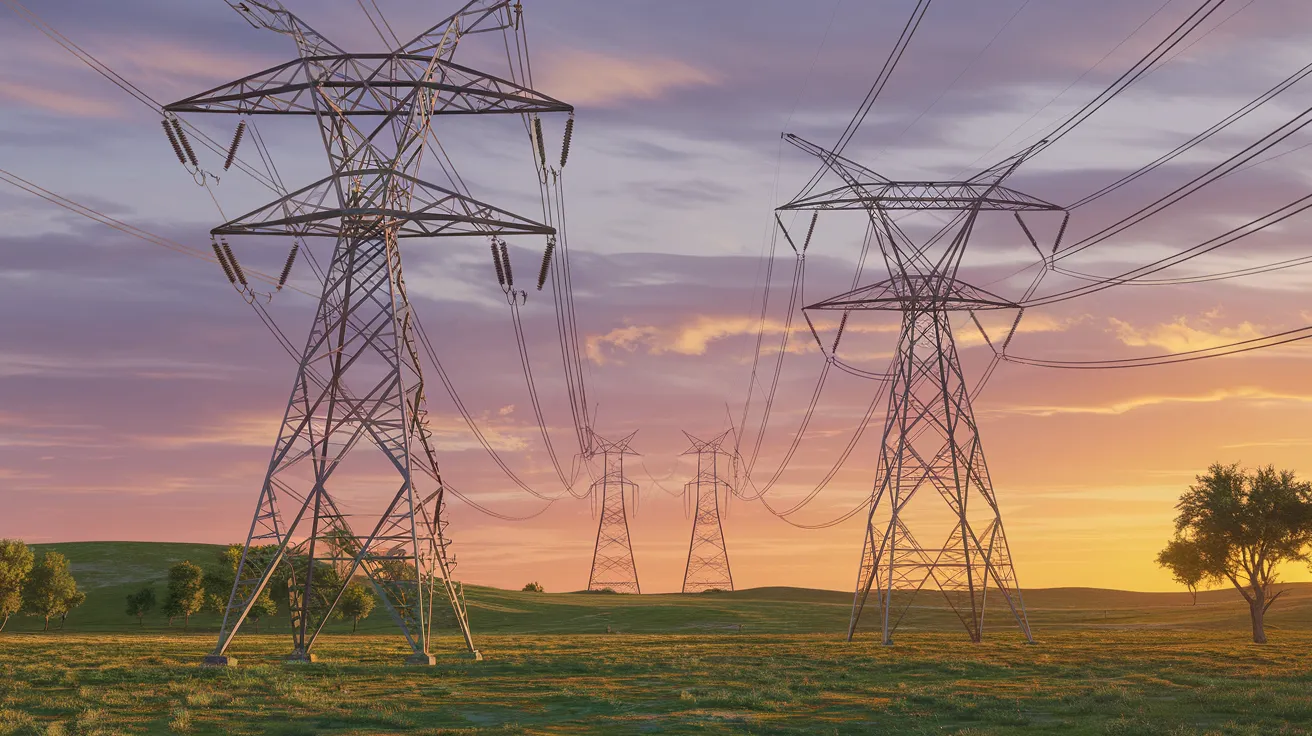
PECO distribution charges pay for the local infrastructure that delivers electricity to your home. This includes power lines, utility poles, transformers, substations, meters, and the crews that maintain and repair them.
These charges appear on every PECO customer's bill—regardless of whether you buy supply from PECO or a competitive supplier. Distribution is a regulated monopoly. PECO owns the wires in southeastern Pennsylvania. No one else can deliver your power.
Distribution charges typically account for 30-40% of your total electric bill. On a $150 monthly bill, $45-60 goes to distribution. The rest covers supply (generation), transmission, taxes, and riders.
The Pennsylvania Public Utility Commission (PA PUC) sets PECO's distribution rates through formal rate cases. PECO must justify every dollar it charges.[1]
Components of PECO's Distribution Charge
PECO's distribution charge is not a single line item. It breaks down into several components.
Customer charge: A flat monthly fee (approximately $7-12/month) that covers meter reading, billing, and account maintenance. You pay this regardless of how much electricity you use.
Distribution charge per kWh: A rate applied to every kilowatt-hour you consume. This is the variable component—roughly 4-5 cents per kWh for residential customers.
System improvement charge (DSIC): Funds infrastructure upgrades—replacing aging poles, underground cable replacement, and smart grid investments. This rider adjusts quarterly.
Universal service charge: Funds low-income customer assistance programs (CAP, LIHEAP supplements).
Transition charge: A legacy charge from Pennsylvania's deregulation transition. Declining over time as utilities recover stranded costs.
Why PECO Distribution Charges Increase
PECO distribution charges have risen steadily, and there are concrete reasons why.
Infrastructure investment. PECO serves 1.6 million electric customers across a territory with aging infrastructure. Replacing underground cables in Philadelphia costs significantly more than overhead lines. PECO invested over $1.4 billion in distribution infrastructure between 2020 and 2024.[2]
Storm hardening. More frequent severe weather events require stronger poles, buried lines, and vegetation management. These costs are recovered through rates.
Smart grid technology. Smart meters, automated switching, and grid sensors improve reliability but cost money upfront.
Rate cases. PECO files a base rate case with the PA PUC every few years. The PUC reviews PECO's costs, revenue needs, and customer impact before approving new rates. The process takes 9-12 months and involves public hearings.
PECO's Distribution System Improvement Charge (DSIC)
The DSIC is a special surcharge that allows PECO to recover infrastructure investment costs between formal rate cases. It adjusts quarterly.
The PA PUC approved the DSIC mechanism under Act 11 of 2012, which allows Pennsylvania utilities to implement a DSIC capped at 5% of distribution revenues. Without DSIC, utilities would need more frequent and larger base rate increases.
The DSIC appears as a separate line item on your bill. It is calculated as a percentage of your distribution charges. When PECO files a new base rate case, the DSIC resets to zero as those costs are rolled into new base rates.
You can track DSIC filings on the PA PUC website. Each quarterly adjustment is publicly posted before taking effect. Consumer advocates review the filings and can challenge them.
What You Can and Cannot Control on Your PECO Bill
Understanding which charges are fixed and which are shoppable helps you focus savings efforts.
Cannot change (regulated):
- Distribution charges — set by PA PUC
- Transmission charges — set by FERC/PJM
- Taxes — set by state and local government
- Universal service/transition charges — regulatory riders
Can change (competitive market):
- Supply/generation charges — Shop for a lower rate from a competitive supplier
Supply typically accounts for 40-55% of your total bill. Switching from PECO's default Price to Compare to a competitive offer can save 1-3 cents per kWh, or $10-30/month on typical usage.
Compare PECO supply rates at ElectricRates.org. You keep PECO delivery. Only the supply line changes.
How to Find Distribution Charges on Your PECO Bill
PECO bills list distribution charges in a dedicated section, usually labeled "Distribution Charges" or "Delivery Charges."
Look for these line items:
Customer Charge: flat monthly fee
Distribution Charge: per-kWh variable charge multiplied by your usage
DSIC: percentage surcharge (labeled separately)
Transition Charge: legacy regulatory charge
To calculate your total distribution cost per kWh, add all distribution-related charges and divide by your total kWh usage. Example: if distribution charges total $48 and you used 1,000 kWh, your distribution cost is 4.8 cents per kWh.
Compare this to your supply charge to see the full picture. Most PECO customers pay more in supply than distribution—which means shopping for supply is your biggest savings opportunity.
Frequently Asked Questions
Can I avoid PECO distribution charges by switching suppliers?
How often do PECO distribution charges change?
Why are PECO distribution charges higher than other PA utilities?
Can I challenge a PECO rate increase?
Looking for more? Explore all our Pennsylvania Energy guides for more helpful resources.
About the author

Consumer Advocate
Enri knows the regulations, the fine print, and the tricks some suppliers use. He's spent years learning how to spot hidden fees, misleading teaser rates, and contracts that sound good but cost more. His goal: help people avoid the traps and find plans that save money.
Compare rates in your area
Topics covered
Sources & References
- PA PUC - PECO Rate Cases (Pennsylvania Public Utility Commission): "The PA PUC regulates PECO distribution rates through formal rate case proceedings"Accessed Mar 2026
- PECO - System Reliability (PECO Energy Company): "PECO has invested over $1.4 billion in distribution infrastructure improvements"Accessed Mar 2026
- PA General Assembly - Act 11 (Pennsylvania General Assembly): "Pennsylvania Act 11 of 2012 authorized the Distribution System Improvement Charge for utilities"Accessed Mar 2026
Last updated: March 26, 2026