Quick Answer
Electricity bills measure usage in kilowatt-hours, but most people have no idea what a kWh actually represents. Understanding the relationship between watts, kilowatts, volts, and amps helps you make sense of your bill and find real ways to cut costs.
What Is a Kilowatt-Hour (kWh)?
A kilowatt-hour (kWh) is the unit your electric company uses to bill you. It measures energy consumed over time—not instantaneous power.
Here's the simplest way to think about it: if you run a 1,000-watt appliance for one hour, you've used exactly 1 kWh. A 100-watt light bulb burning for 10 hours? Also 1 kWh. A 2,000-watt space heater for 30 minutes? Still 1 kWh.
The formula: kWh = watts × hours ÷ 1,000
At the national average of 16.6¢/kWh, that single kilowatt-hour costs you about 17 cents.[1] The average American home uses roughly 10,500 kWh per year—about 875 kWh per month.[2] That's the number that determines whether your bill is $100 or $250.
What Is a Watt?
A watt (W) measures instantaneous power—how much electricity a device draws right now. Think of it as the speed of electricity consumption.
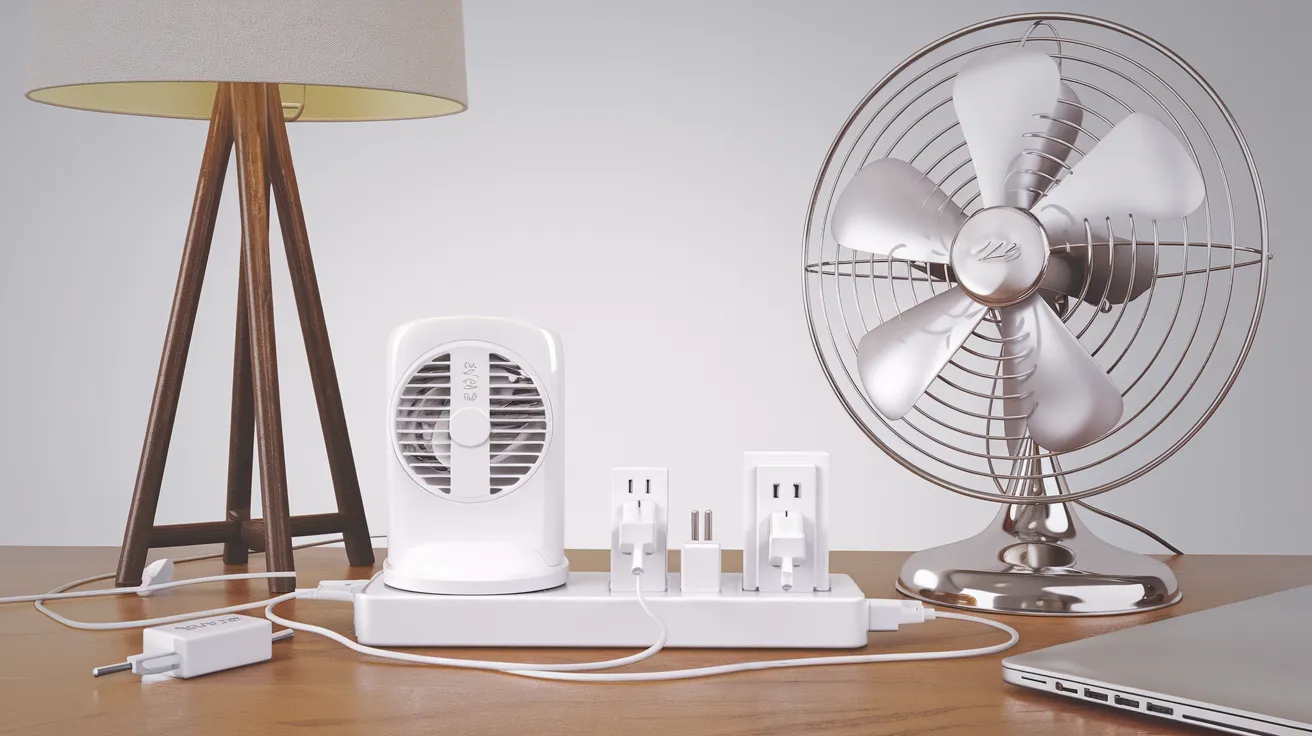
Every appliance has a wattage rating. A phone charger draws about 5 watts. A laptop uses 50-100 watts. A window AC unit pulls 500-1,500 watts. An electric dryer hits 5,000 watts.
A kilowatt (kW) is simply 1,000 watts. It's used for larger loads because saying "5 kilowatts" is easier than "5,000 watts."
The critical distinction: watts measure the rate of energy use, while kilowatt-hours measure the total amount consumed. Your microwave might draw 1,200 watts, but if you only run it 15 minutes a day, that's just 0.3 kWh—about 5 cents.
Volts and Amps: The Water Pipe Analogy
Electricity has three core measurements that work together. The water pipe analogy makes them intuitive.
Voltage (volts) is the pressure pushing electricity through wires—like water pressure in a pipe. US homes use 120V for standard outlets and 240V for heavy appliances like dryers and ovens.
Amperage (amps) is the flow rate—how much electricity moves through the wire at a given moment. A standard home outlet handles 15-20 amps.
Watts = volts × amps. That's Ohm's law in its simplest form. A 120V outlet delivering 10 amps provides 1,200 watts of power. Your circuit breaker panel limits amps per circuit to prevent overheating—which is why plugging too many devices into one circuit trips the breaker.
How to Calculate Electricity Cost for Any Appliance
Calculating what any device costs to run takes three numbers: wattage, hours of use, and your rate per kWh.
Step 1: Find the wattage. Check the label on the device or look it up online. A refrigerator averages about 150 watts (it cycles on and off).
Step 2: Estimate daily hours of use. A fridge runs 24/7. A TV might run 5 hours.
Step 3: Apply the formula: Cost = (watts × hours × days) ÷ 1,000 × rate
Example: A 150-watt fridge running 24 hours for 30 days at 16.6¢/kWh:
(150 × 24 × 30) ÷ 1,000 × $0.166 = $17.93/month
That's your fridge's share of the electric bill. Run this math for your top 5 appliances to find where your money actually goes.
Common Appliance Wattage and Monthly Cost
Knowing what each appliance draws helps you prioritize savings. Here are the biggest electricity consumers in a typical home, based on average usage at 16.6¢/kWh.
Central air conditioning: 3,500W, ~$65-100/month in summer. This single appliance can account for 40-50% of your summer bill.
Electric water heater: 4,500W, ~$35-50/month. Runs 3-4 hours daily for a family of four.
Electric dryer: 5,000W, ~$10-15/month. High wattage but limited hours.
Refrigerator: 150W average, ~$18/month. Low wattage but runs 24/7.
LED bulb: 10W, ~$0.50/month per bulb. Compare that to the old 60W incandescent at $3/month. Switching 20 bulbs saves roughly $50/month.
kWh vs. kW: Why the Difference Matters
The kW vs. kWh distinction trips up almost everyone, but it directly affects how you understand your bill and solar quotes.
kW (kilowatt) = power capacity. It's what a device can draw. Your home might have a 200-amp service panel capable of delivering about 24 kW simultaneously.
kWh (kilowatt-hour) = energy consumed. It's what you actually used. Your bill charges per kWh, not per kW.
Solar installers describe panel systems in kW (e.g., "a 6 kW system"). That's the peak output capacity. A 6 kW system producing power for 5 peak sun-hours generates 30 kWh per day—enough to offset about 900 kWh/month.
Demand charges on commercial bills do charge for peak kW usage. Residential bills in most states charge only for kWh consumption.
How to Read Your Electric Meter
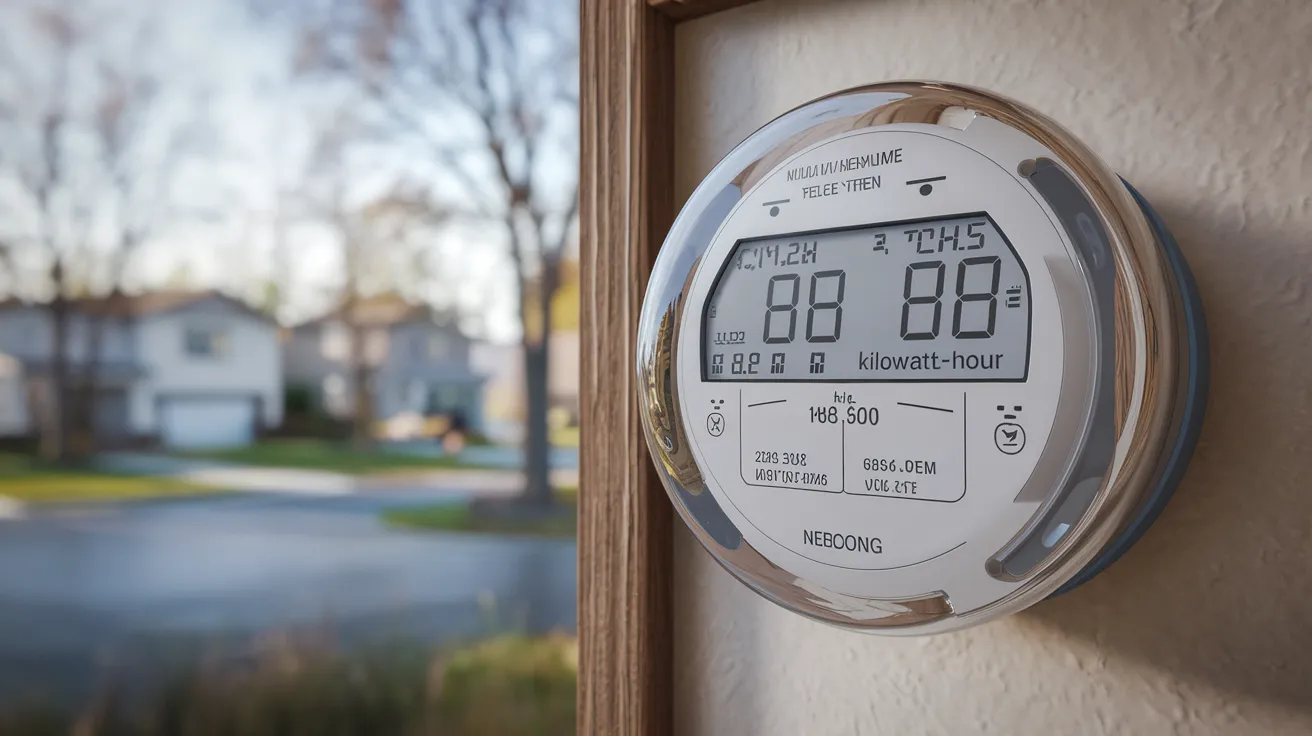
Your electric meter tracks total kWh consumed. Understanding it helps you verify your bill and catch billing errors.
Digital meters display the current reading in kWh. Your monthly usage equals this month's reading minus last month's. Most smart meters also show real-time demand in kW.
Analog meters have 4-5 dials that spin as you use electricity. Read them left to right, noting the lower number when a dial is between digits. The difference between readings gives your consumption.
Utilities typically read your meter once per month. If they estimate instead of reading (common during bad weather), your next bill adjusts for the difference. Suspiciously high bill? Read your meter yourself and compare to what the utility charged. Errors happen more often than you'd think.
Frequently Asked Questions
How many watts are in a kilowatt-hour?
What uses the most electricity in a home?
How much does 1 kWh of electricity cost?
What is the difference between watts and kilowatt-hours?
Why is my electric bill so high if my rate is low?
Looking for more? Explore all our Understanding Deregulation guides for more helpful resources.
About the author

Consumer Advocate
Enri knows the regulations, the fine print, and the tricks some suppliers use. He's spent years learning how to spot hidden fees, misleading teaser rates, and contracts that sound good but cost more. His goal: help people avoid the traps and find plans that save money.
Compare rates in your area
Topics covered
Sources & References
- Electric Power Monthly (U.S. Energy Information Administration): "The average US residential electricity rate was 16.6 cents per kWh in 2024"Accessed Mar 2026
- Residential Energy Consumption Survey (U.S. Energy Information Administration): "The average US household consumes approximately 10,500 kWh of electricity per year"Accessed Mar 2026
- Estimating Appliance and Home Electronic Energy Use (U.S. Department of Energy): "Home appliance energy consumption varies from 5 watts for phone chargers to 5,000 watts for electric dryers"Accessed Mar 2026
- LED Lighting (U.S. Department of Energy): "LED bulbs use at least 75% less energy than incandescent lighting"Accessed Mar 2026
Last updated: March 26, 2026