Quick Answer
The national average electricity cost is 16.6¢ per kWh, but your actual cost depends on your state, utility, and plan type. Here's how to calculate your real per-kWh cost and find out if you're overpaying.
How Much Does Electricity Cost Per kWh?
The average cost of electricity in the United States is 16.6 cents per kilowatt-hour for residential customers, based on 2024 EIA data.[1] That's a useful benchmark—but it's not what you pay.
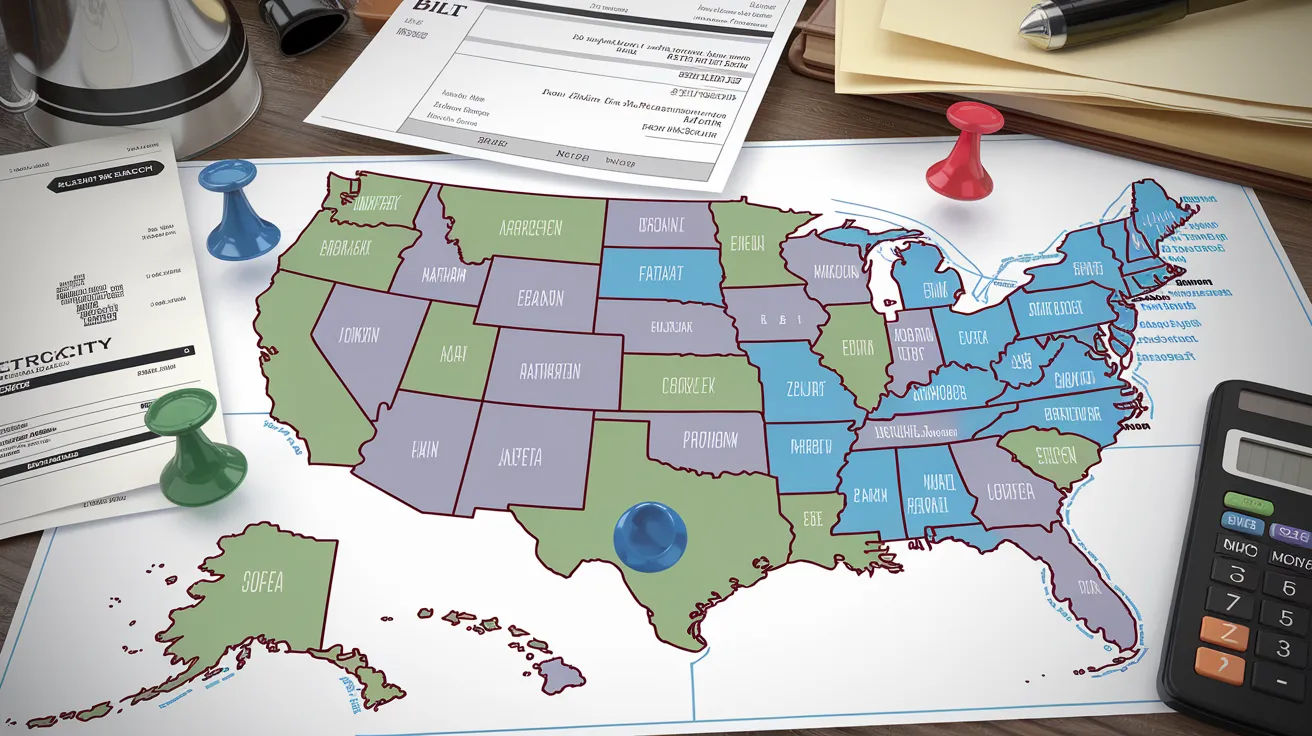
Residential rates by state range from about 10¢/kWh in Utah and Idaho to over 35¢/kWh in Hawaii. Even within a single state, rates vary by utility territory. In Massachusetts, Eversource customers might pay 28¢/kWh on the basic service rate, while a shopped competitive rate could be 14-16¢.
The 16.6¢ average also masks the difference between your supply rate (the advertised per-kWh price) and your all-in cost (supply + delivery + taxes + fees). Your all-in cost is always higher than the supply rate alone.
How to Calculate Your Actual Cost Per kWh
Finding your real electricity cost takes 30 seconds with last month's bill.
Step 1: Find your total bill amount. Use the "amount due" before any late fees—just electricity charges.
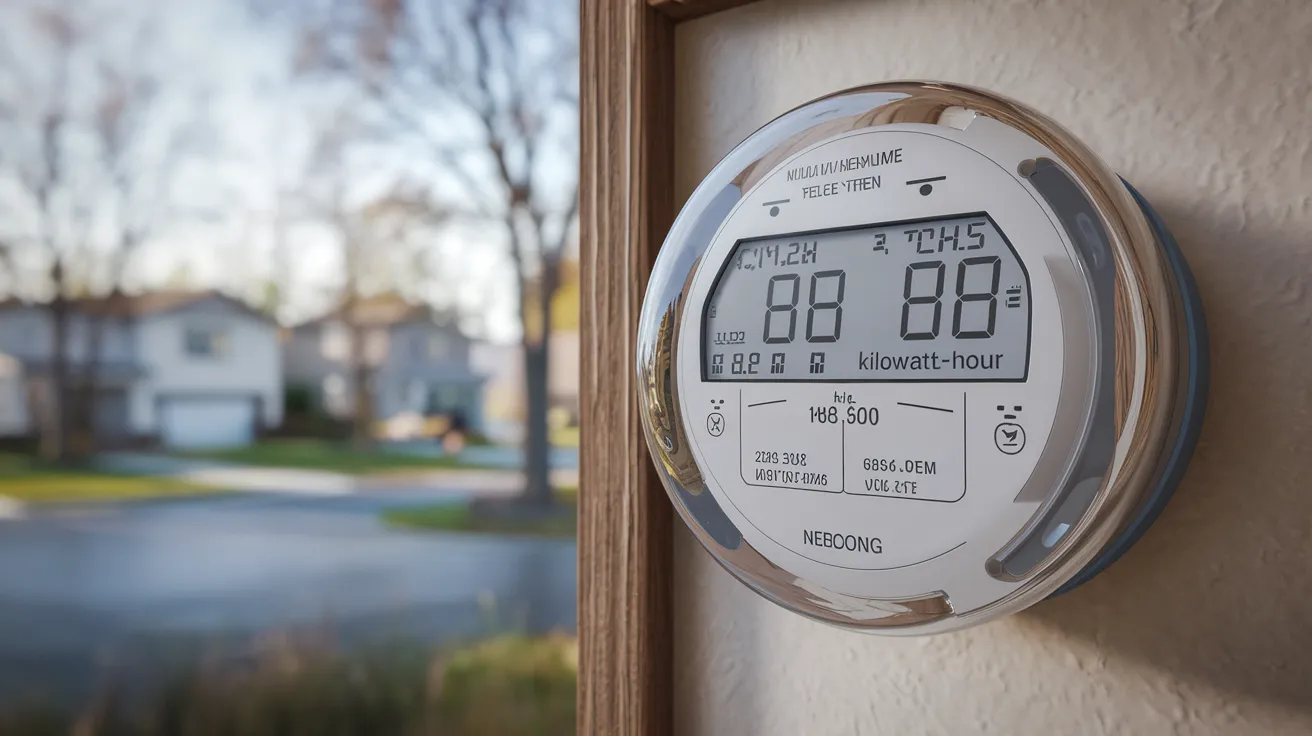
Step 2: Find your total kWh consumed. It's listed on every bill, usually near the meter reading.
Step 3: Divide. Total bill ÷ total kWh = your all-in cost per kWh.
Example: $165 bill ÷ 950 kWh = 17.4¢/kWh all-in.
This number is more useful than the supply rate because it captures everything—delivery charges, taxes, surcharges, and monthly fees. Compare this to the national average of 16.6¢. If you're well above, you're likely in a high-cost state or on an expensive plan. Either way, it's the starting point for saving money.
Average Electricity Cost by State: Where You Stand
State averages give you context for whether your rate is competitive. Here's where the four deregulated states served by ElectricRates.org stand.[2]
Texas: 13-14¢/kWh average. But deregulated areas see rates from 8-18¢ depending on the plan. Fixed-rate plans during low-demand months offer the best deals.
Ohio: 13-15¢/kWh average. Standard Service Offer rates from AEP Ohio, Duke Energy, and FirstEnergy sit around 6-8¢ for supply, with competitive plans often beating that.
Pennsylvania: 16-18¢/kWh average. PECO and PPL territories have active supplier competition. Shopping typically saves 10-15% on the supply portion.
Massachusetts: 26-29¢/kWh average—among the highest in the nation. Competitive suppliers frequently offer rates 30-40% below the utility default. The savings potential here is enormous.
Five Factors That Affect Your Cost Per kWh
Your per-kWh cost isn't random. These five factors explain most of the variation between households.
1. Your plan type. Fixed rates provide stability. Variable rates fluctuate monthly. Default utility rates are almost always the most expensive option in deregulated states.
2. Your usage level. Some plans have tiered pricing—the first 500 kWh might cost 10¢, but everything over 1,000 kWh costs 15¢. High usage can push your average rate up.
3. Time of use. Utilities with TOU pricing charge more during peak hours (2-7 PM) and less overnight. Your cost depends on when you use electricity, not just how much.
4. Season. Wholesale prices spike in summer and winter when demand peaks. Variable rate customers feel this directly.
5. Monthly fees. A $9.99/month plan fee on 500 kWh usage adds 2¢/kWh to your effective rate.
Calculate Your Monthly Electricity Bill
Once you know your rate and usage, projecting your monthly bill is straightforward.
Monthly bill = (rate per kWh × monthly kWh) + fixed fees
The average US household uses 875 kWh per month (10,500 kWh annually).[3] Here's what that costs at different rates:
At 10¢/kWh: $87.50 + fees ≈ $95-105/month
At 16.6¢/kWh: $145.25 + fees ≈ $155-170/month
At 25¢/kWh: $218.75 + fees ≈ $230-250/month
At 30¢/kWh: $262.50 + fees ≈ $275-295/month
The difference between a 10¢ rate and a 25¢ rate on the same usage is over $130/month—nearly $1,600/year. That's why shopping for rates matters so much in deregulated states. Even a 2¢/kWh difference saves $210/year at average usage.
What Does Electricity Cost Per Appliance?
Breaking down cost by appliance reveals where your money actually goes. Here's the monthly cost for common appliances at the 16.6¢/kWh national average.
Central air conditioning dominates summer bills at $65-100/month, consuming 1,000-1,500 kWh during hot months. In Texas, AC can account for 50%+ of the summer bill.
Electric water heater: $35-50/month. Heating water 24/7 for showers, dishes, and laundry adds up.
Refrigerator: $15-20/month. Newer Energy Star models cost closer to $10.
Lighting (whole house): $10-25/month with LEDs, $40-80 with old incandescents.[4]
Washer + dryer: $15-25/month combined for average use.
Knowing these numbers helps you target the biggest energy consumers first when trying to lower your bill.
How to Lower Your Cost Per kWh
Two strategies work: lower your rate or lower your usage. Ideally both.
To lower your rate in deregulated states, compare plans at ElectricRates.org. Look at the all-in cost, not just the advertised rate. Factor in monthly fees and contract length. Fixed-rate plans signed in fall or spring typically offer the best pricing because demand is lower.
To lower usage, start with the big three: HVAC, water heating, and lighting. A programmable thermostat saves 10-15% on heating and cooling. Lowering your water heater to 120°F saves 4-22% on water heating costs. Switching to LEDs cuts lighting costs by 75%.[5]
Combine a competitive rate with modest efficiency improvements and you can realistically cut your electricity costs by 25-40% without changing your lifestyle.
Frequently Asked Questions
What is a good price per kWh for electricity?
How much does it cost to run a 1,500 watt heater for 24 hours?
Why does my electricity cost more than the advertised rate?
How do I compare electricity costs between states?
Does using less electricity lower my rate?
Looking for more? Explore all our Understanding Deregulation guides for more helpful resources.
About the author

Consumer Advocate
Enri knows the regulations, the fine print, and the tricks some suppliers use. He's spent years learning how to spot hidden fees, misleading teaser rates, and contracts that sound good but cost more. His goal: help people avoid the traps and find plans that save money.
Compare rates in your area
Topics covered
Sources & References
- Electric Power Monthly - Table 5.6.A (U.S. Energy Information Administration): "The average US residential electricity price was 16.6 cents per kWh in 2024"Accessed Mar 2026
- State Electricity Profiles (U.S. Energy Information Administration): "State-level average residential electricity rates for all 50 states"Accessed Mar 2026
- Frequently Asked Questions (U.S. Energy Information Administration): "Average annual electricity consumption for a US residential utility customer was about 10,500 kWh in 2023"Accessed Mar 2026
- Lighting Choices to Save You Money (U.S. Department of Energy): "Lighting accounts for approximately 15% of an average home's electricity use"Accessed Mar 2026
- Energy Saver - Thermostats (U.S. Department of Energy): "Programmable thermostats can save approximately 10% per year on heating and cooling"Accessed Mar 2026
Last updated: March 26, 2026